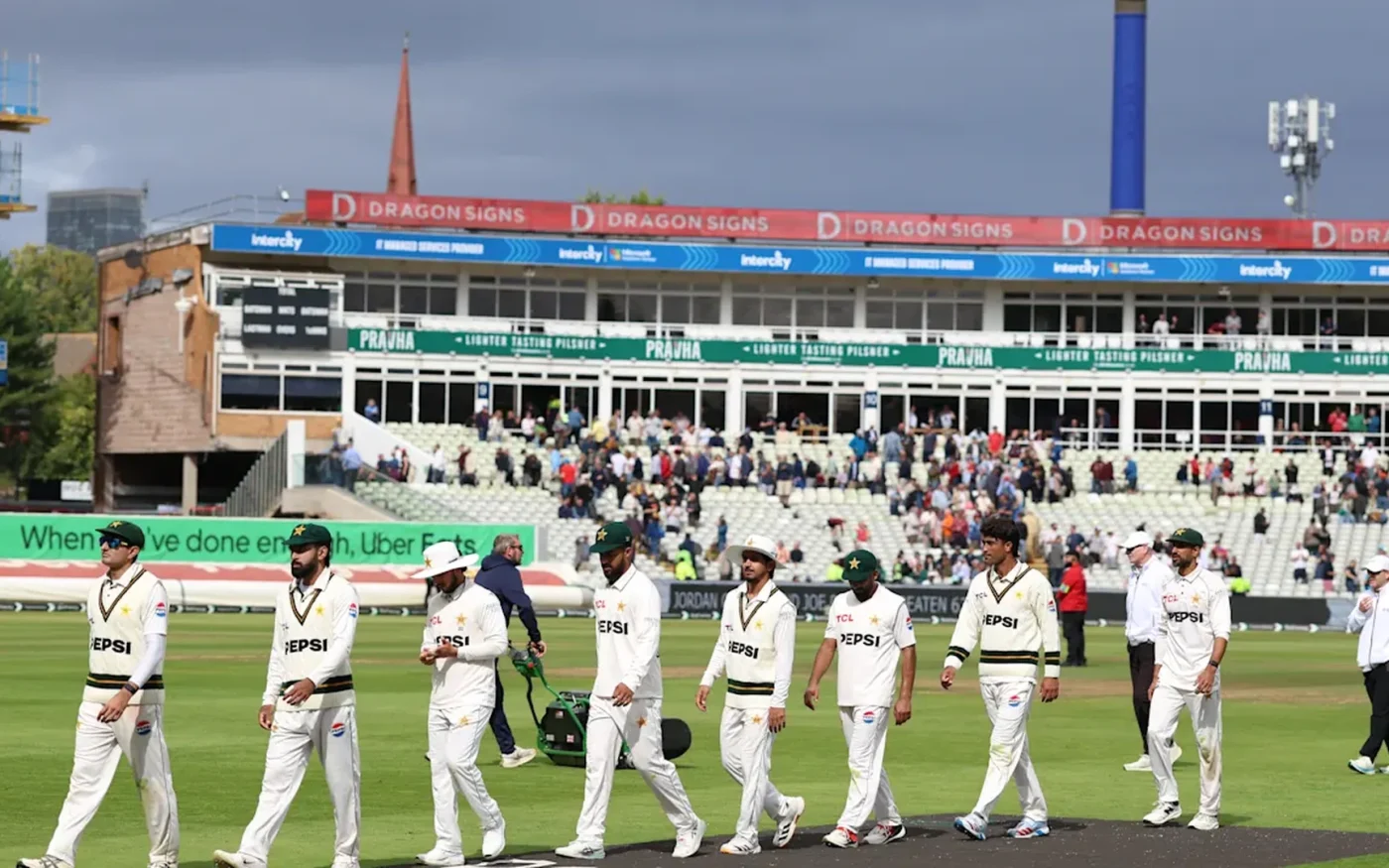
Pakistan have lost eleven points in the International Cricket Council championship for five-day matches. Their players also lost half of their payment for the match against England at Edgbaston. The council found that Pakistan completed eleven fewer overs than required within the available time, even after all permitted time adjustments. One over is a set of six balls. The two sanctions follow separate rules: one reduces the players’ payment, while the other reduces the team’s position in the championship.
One delay, two separate sanctions
Match referee Ranjan Madugalle concluded that Pakistan were eleven overs short of the required pace. Each over contains six balls. The finding concerns the number of overs Pakistan completed within the allotted time. Madugalle first included every permitted adjustment to the time calculation; he did not simply count every minute that the players spent on the field. The ruling applies to Pakistan’s third five-day match against England at Edgbaston, not to an earlier game in the series.
Under the International Cricket Council Code of Conduct, the fine rises by five percent of each player’s match payment for every over left unfinished when the allowed time expires. Eleven unfinished overs would remove more than half of that payment if there were no limit. The rule sets the maximum fine at fifty percent, and the council applied that maximum. This explains why the actual fine is not fifty-five percent. The limit is an essential part of the calculation; leaving it out would give readers the wrong amount.
The championship for five-day matches uses a different rule for the same shortage. The team loses one championship point for every unfinished over. Pakistan’s shortage of eleven overs therefore cost eleven team points. This deduction affects the championship standings, while the financial penalty affects individual players. Neither sanction changes the score of the completed match. Both were imposed afterwards under the competition and conduct rules.
| Rule | Who it affects | Penalty |
|---|---|---|
| Minimum pace for completing overs | Players’ match payments | 50% fine after the maximum was applied |
| Five-day cricket championship | Pakistan’s team points | 11 points deducted |
The referee’s calculation and the captain’s response
Madugalle made the decision as a member of the International Cricket Council’s elite group of match referees. The charge was brought by on-field umpires Paul Reiffel and Chris Gaffaney, third umpire Allahudien Palekar and fourth umpire Russell Warren. Their names identify the officials who reported the incident. They do not mean that each umpire announced a separate fine or that four different offences occurred. The official statement describes one shortage in completed overs and one charge accepted by Pakistan.
Captain Babar Azam admitted the violation and accepted the proposed sanction. The council therefore said that a formal hearing was unnecessary. That does not mean the punishment was provisional or that the team had not been informed of the finding. It means the process ended without a disputed hearing. The public release states the shortage, the two consequences and the captain’s response in one account, so there is no need to infer a dispute that the record does not show.
Time adjustments matter because a five-day match can contain interruptions that affect how quickly overs are completed. The official release does not publish a minute-by-minute list of every adjustment. It would therefore be misleading to blame the shortage of eleven overs on one pause, one player or one tactical decision. The finding concerns the team’s overall pace after the referee applied the permitted adjustments. The captain accepted responsibility for the team’s violation, but the release does not identify one player as the cause of the delay.
What changes after Edgbaston
The Edgbaston match has already finished. The news is the council’s decision after that game, not another account of its score. Pakistan now have eleven fewer points in the current championship for five-day cricket than before this ruling. Future results and any further sanctions will affect the standings separately. The release does not state that Pakistan can recover these specific points by paying the financial penalty.
Pakistan’s next five-day matches will be judged under the same timing rules. This decision shows how quickly a shortage can reach the maximum financial penalty while team points continue to be deducted one by one. That is an explanation of the rule, not a forecast of another violation. The established outcome at Edgbaston is enough: after applying all time adjustments, the referee found a shortage of eleven overs, Babar admitted the violation, the players lost half of their match payments and Pakistan lost eleven championship points.