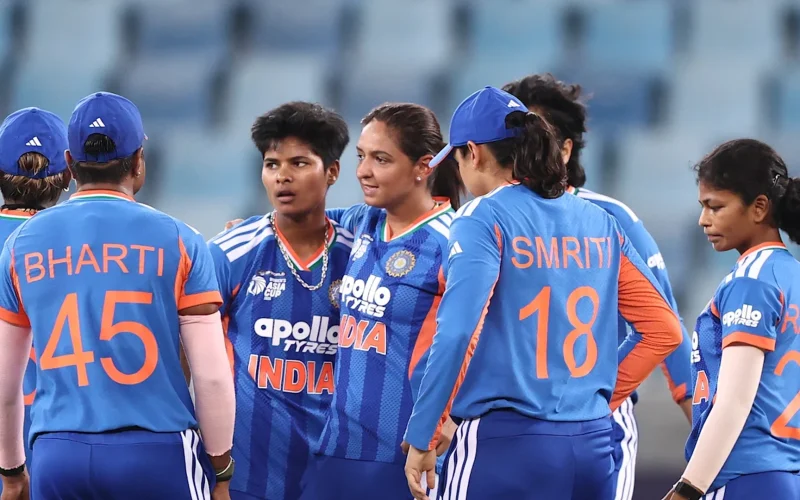
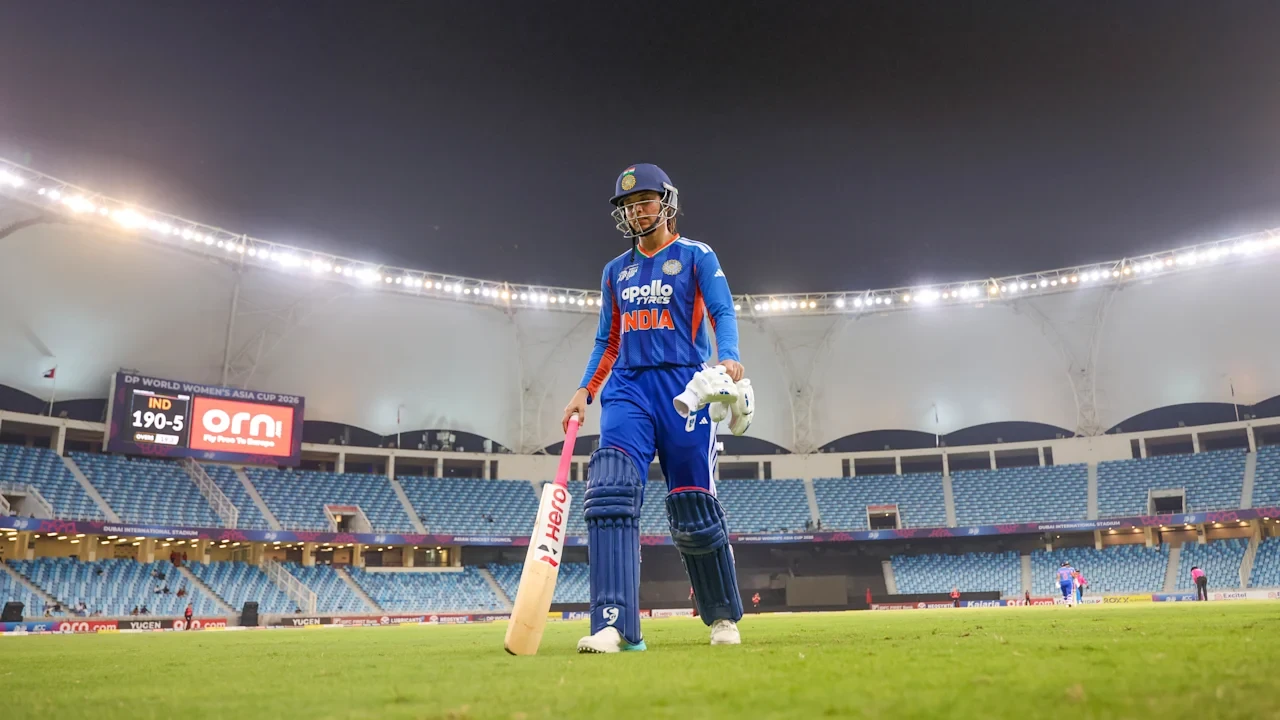
Smriti Mandhana produced one of the clearest statements of her career when India met Hong Kong, China in the Women’s Asia Cup. The opener scored 124 from 64 balls, drove India to 193 for five and helped set up a 137-run victory. Her innings also carried her past two important international records, so the match became more than a comfortable group-stage win.
An innings built on pressure, not patience
Mandhana did not wait for the bowlers to settle. She attacked whenever the length allowed it and kept the scoring rate high without turning every delivery into a gamble. Her 14 fours came from controlled strokes through available gaps, while seven sixes showed how quickly she could punish a ball that entered her preferred hitting areas. The balance between placement and power made the innings difficult to contain.
The numbers explain the scale of the contribution. Boundary shots supplied 98 of her 124 runs, yet the innings was not simply a sequence of swings. Mandhana still had to rotate the strike, judge field changes and decide which bowler to challenge. Those quieter choices protected India’s momentum between the larger shots and prevented Hong Kong, China from building a calm over.
India reached 193 for five, a total that gave the bowlers room to attack rather than defend. Hong Kong, China were held to 56, leaving a margin of 137 runs. The result reflected the difference between the sides, but Mandhana’s method remained the central story because it turned an expected victory into a record-setting performance.
Two milestones in the same evening
The century lifted Mandhana to 10,880 international runs. That moved her beyond Mithali Raj’s total of 10,868 and made her India’s leading run-scorer in women’s international cricket. The comparison matters because Raj set the standard for consistency across formats over a long career. Passing that mark required more than one exceptional tournament; it reflected Mandhana’s output in Tests, one-day internationals and T20 internationals.
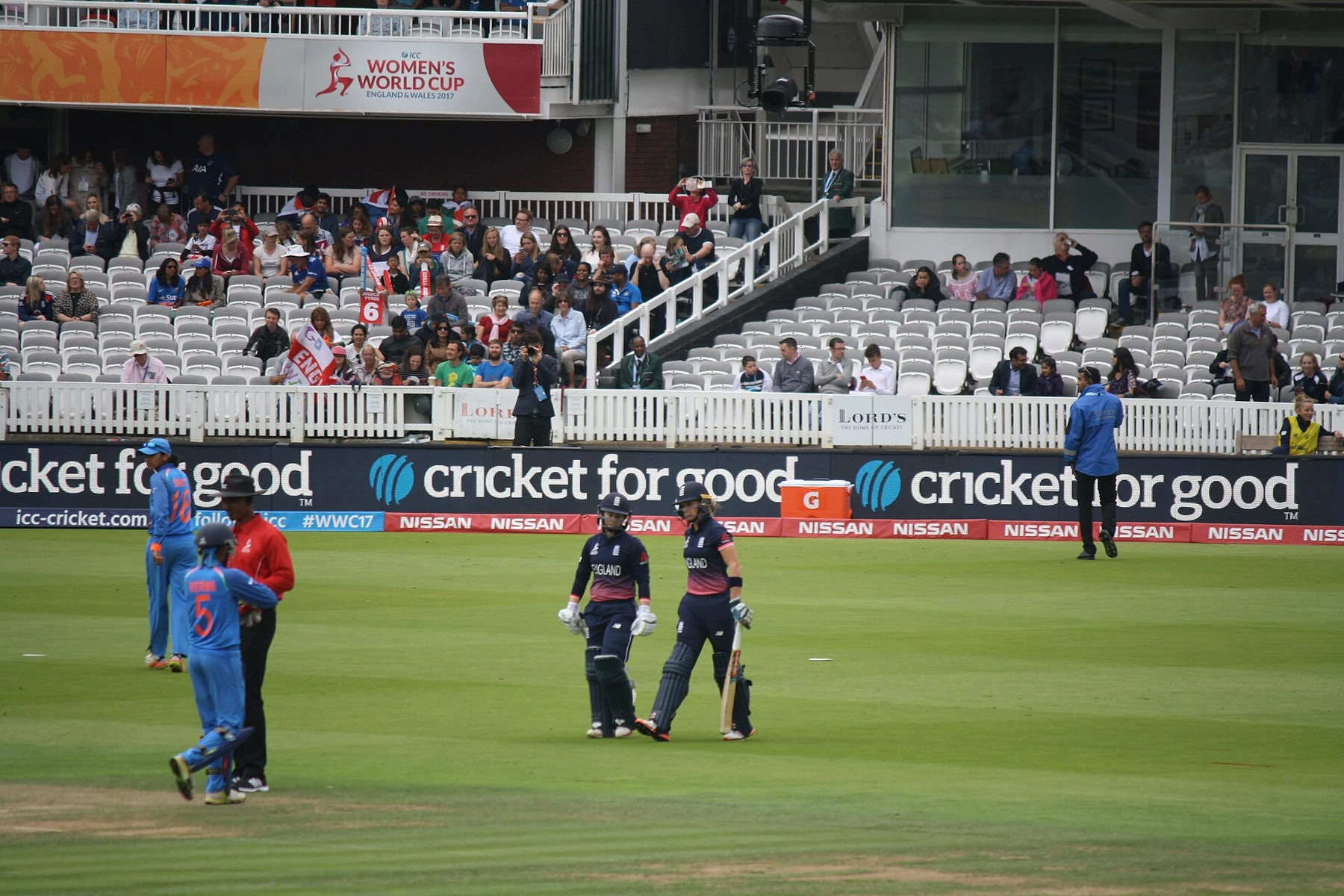
Mandhana also reached 18 international centuries, moving ahead of former Australia captain Meg Lanning. She now owns the highest century total in women’s international cricket. This was only her second hundred in T20 internationals, which underlines where much of her record has been built: sustained innings in longer white-ball matches, supported by an ability to adapt her scoring range to the shorter game.
| Measure | Mandhana’s figure | Why it mattered |
|---|---|---|
| Match innings | 124 from 64 balls | Set the platform for India’s 193 for five |
| Boundary count | 14 fours and 7 sixes | Kept the required pace beyond Hong Kong, China’s reach |
| Career international runs | 10,880 | Passed Mithali Raj’s India record of 10,868 |
| International centuries | 18 | Moved ahead of Meg Lanning’s record |
Why the performance helps India beyond one result
A dominant opening innings changes how the rest of a batting order can operate. Partners are not forced to manufacture shots from their first few deliveries, and middle-order batters can choose between consolidation and another burst of aggression. India used that advantage here. Even after a wicket, the innings had enough pace to remain on course for a total close to 200.
The knock also offered a practical model for future matches. Mandhana scored quickly through orthodox areas before expanding her options. That approach is easier for teammates to read than an innings based only on improvised shots. It creates clear running opportunities, gives the non-striker time to understand the field and makes it harder for the opposition captain to protect every boundary at once.
For Hong Kong, China, the defeat showed how narrow the margin for error becomes against an elite opener. Missing the intended length by a small amount repeatedly produced boundaries. Their reply then began under the weight of a target that demanded immediate acceleration. That is a difficult situation for a developing side, but the match provided direct experience of the standards required at this level.
A record night with a simple competitive lesson
The records will remain beside Mandhana’s name, but the most useful part of the innings was its clarity. She identified the scoring options early, continued to make sound decisions after reaching fifty and did not allow the approaching century to slow the team. India received both the personal landmark and the total the match required.
Her next challenge is to carry the same judgment into tighter contests, where one quiet over or one mistimed attack can change the result. This performance showed that she can combine responsibility with a strike rate that places an opponent under constant stress. For India, that combination is more valuable than the records alone.